





Lorem Ipsum is simply dummy text of the printing and typesetting industry. Lorem Ipsum has been the industrys standard dummy text ever since the ...
FIlter (540 products)
Filter
71 products
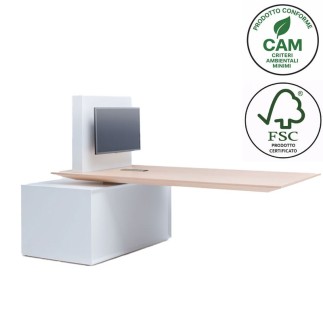
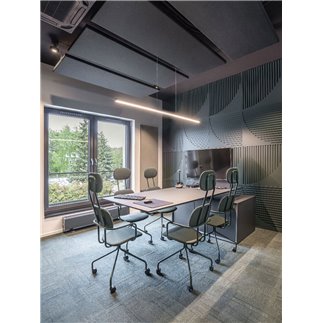
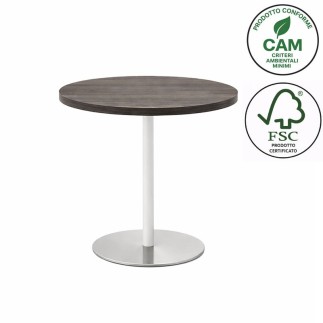
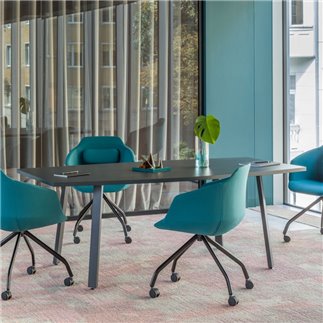
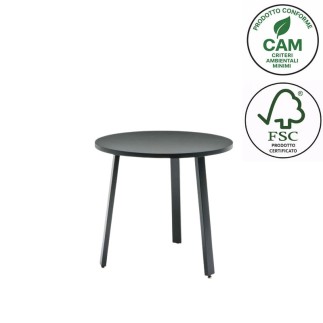
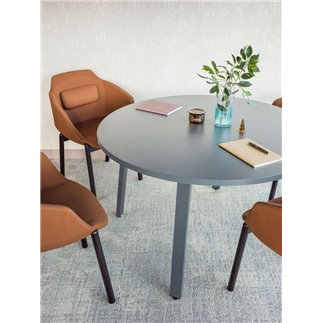
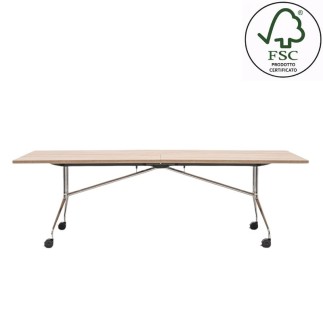
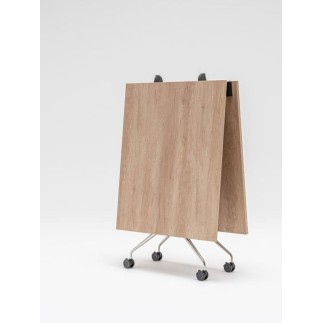
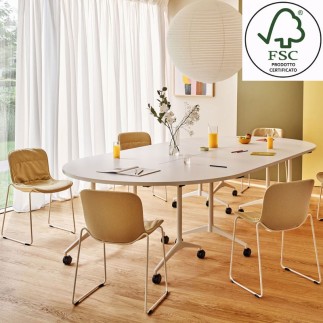
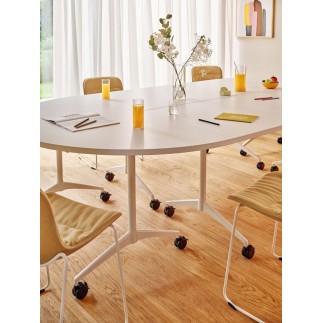
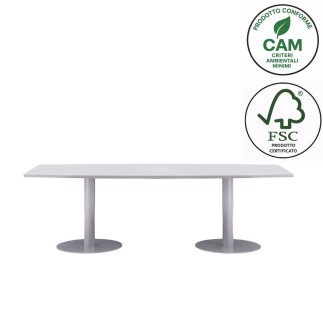
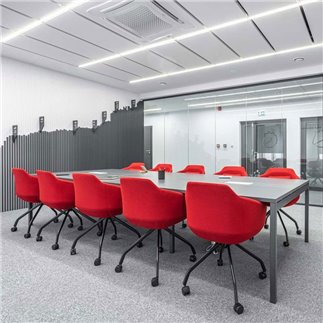
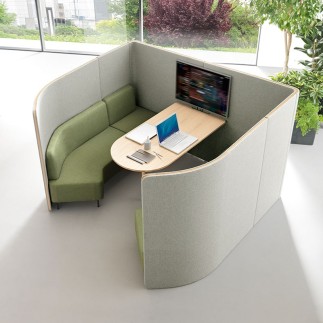
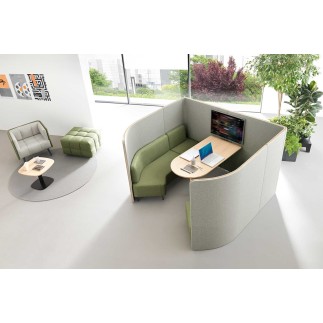
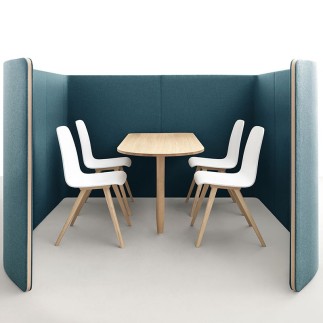
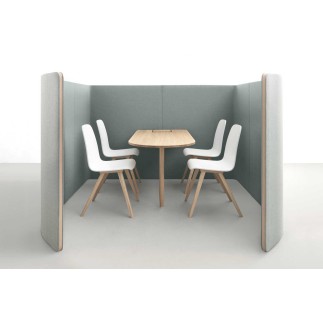
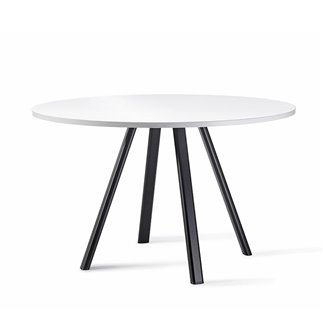
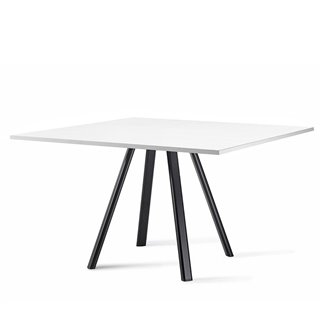
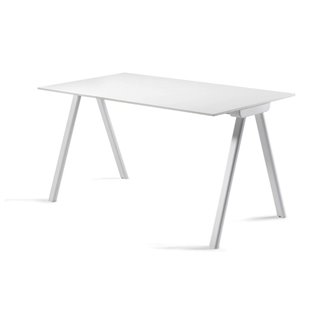
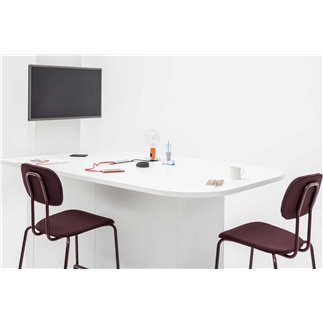
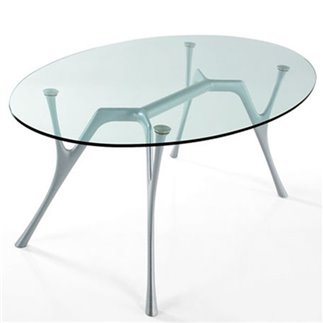
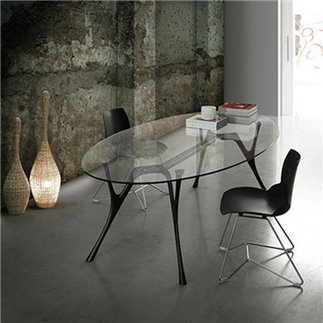
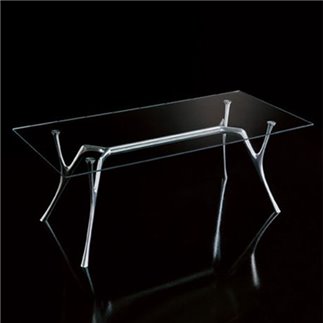
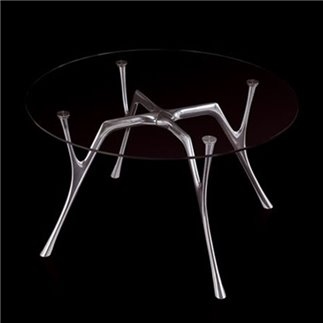
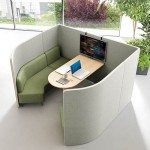
Meeting Tables for Meeting Rooms, Offices, Professional Practices and Conference Rooms
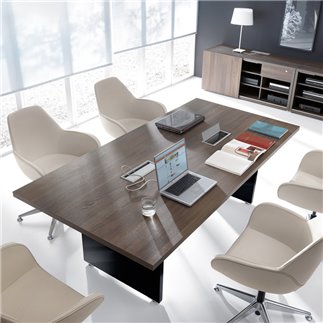
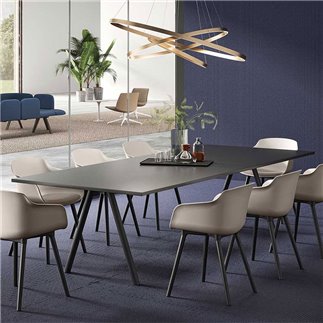
Meeting tables are the focal point of spaces designed for discussion, collaboration and shared decision-making. From a small meeting room in a professional practice to a corporate boardroom, from a hotel conference room to an executive office, the table must meet specific requirements in terms of comfort, dimensions, technology and overall appearance.
Isarreda offers a selection of customisable meeting tables for offices and hospitality spaces, available in different sizes, shapes, materials, colours and finishes, designed to suit both operational environments and more prestigious settings.
The possibility to choose from rectangular, square, round, oval or large meeting tables makes it possible to design the room according to the number of participants and the available space.
Why Choose Isarreda Meeting Tables?
• Versatile solutions for every environment: meeting tables for meeting rooms, boardrooms, professional practices, conference rooms and business lounges
• Different shapes and sizes: a wide range of rectangular, square, round and oval tables, as well as other configurations suitable for both informal meetings and larger gatherings
• Electrification: possibility to add top access units, cable trays and cable management systems
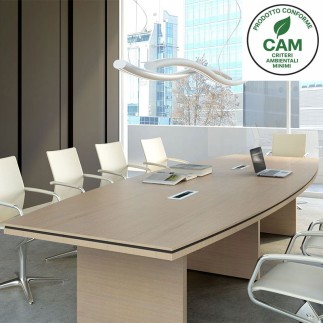
• CAM compliance: meeting tables compliant with the Italian Minimum Environmental Criteria (CAM) when supported by the manufacturer's documentation
• Reaction to fire: some tabletops may offer specific reaction-to-fire performance
Office Meeting Tables
An office meeting table is not merely a functional element: it is often one of the most representative pieces of furniture in a professional environment, as it is used to meet clients, colleagues, suppliers and business partners. A meeting room may be used for operational meetings, executive meetings, video conferences, interviews, client meetings or business negotiations.
It is therefore important to choose a table that combines functionality and aesthetics. In an operational office, a simple and practical solution may be preferable, while in an executive office or boardroom, dimensions, finishes, materials and visual presence become increasingly important.
Tables for Meeting Rooms
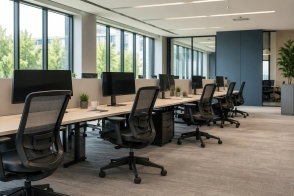
The choice of a meeting room table should begin with the available space. The size of the room determines the table length, the number of participants and the amount of space required for circulation and freedom of movement.
The intended use of the table also depends greatly on its dimensions: a table that is too large can make the room less functional, while one that is too small may limit comfort and usable workspace.
Another fundamental aspect when choosing a meeting table is the number of people who will use it. Requirements may vary significantly: 2–4 people for quick meetings, 6–8 people for operational meetings, and 10 or more people for conference rooms and larger meeting spaces.
Rectangular Meeting Tables
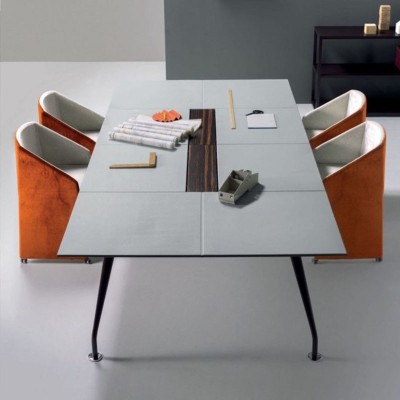
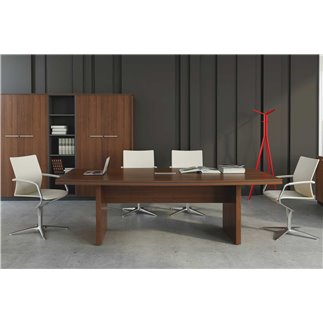
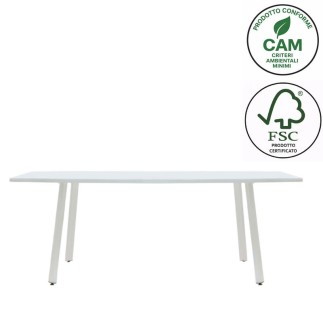
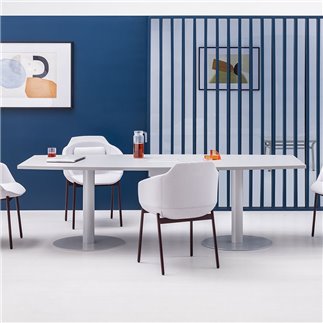
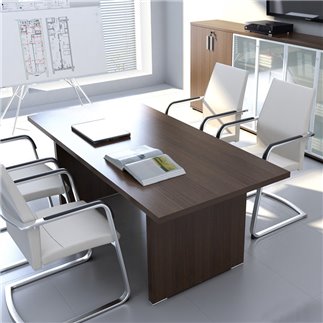
Rectangular meeting tables are among the most common configurations in office environments. Their shape allows participants to be arranged along the two main sides and at both ends of the table, creating an orderly and clearly defined layout.
They are particularly suitable for corporate meeting rooms, professional practices, executive offices, conference rooms and business hotels.
The rectangular layout also facilitates the integration of top access units and electrification systems along the central axis of the table.
Square Meeting Tables
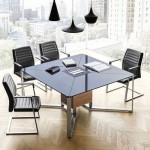
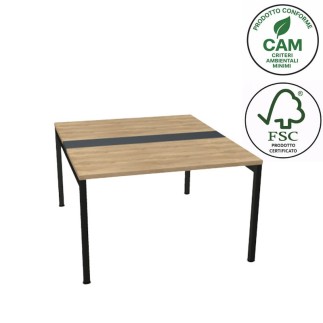
Square meeting tables are particularly suitable for smaller groups and can be used for both formal and informal meetings involving four to six people, depending on their dimensions.
Their shape creates a more uniform distance between participants compared with a very long table and encourages direct interaction. Square tables are therefore ideal for professional practices, smaller offices, interview rooms and small meeting areas.
Round and Oval Meeting Tables
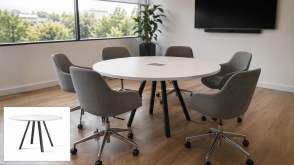
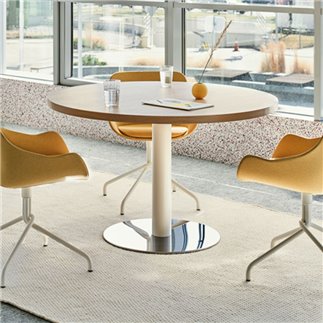
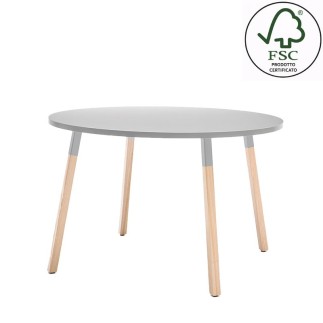
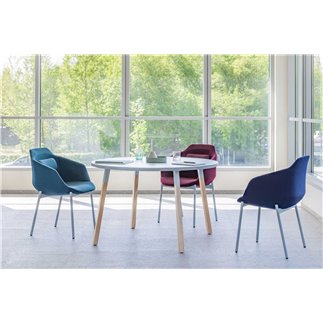
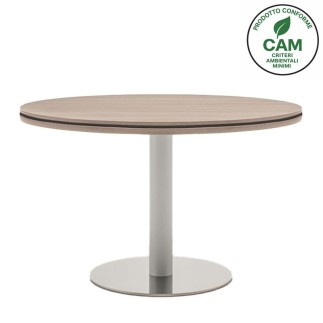
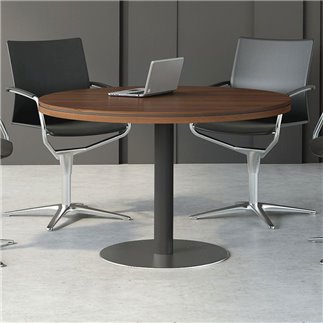
A round meeting table creates a visually balanced layout and makes the environment feel less formal. It is an excellent choice for brainstorming sessions, informal meetings, interviews and, more generally, meetings involving smaller groups.
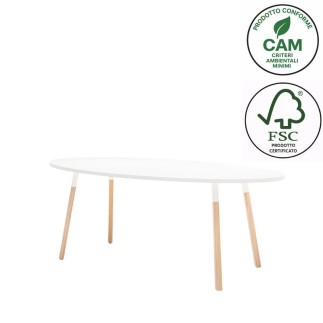
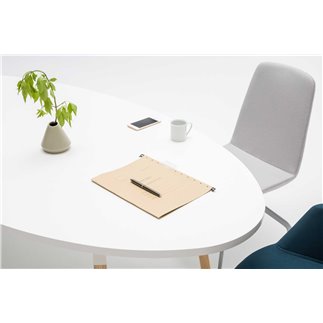
Oval meeting tables, on the other hand, provide an intermediate solution between the linear geometry of a rectangular table and the softer appearance of a round one. Their rounded ends help create a more fluid environment and can make the table appear visually less rigid.
Large Meeting Tables
Large meeting rooms require tables designed to accommodate numerous participants without compromising comfort or functionality.
As dimensions increase, accessibility from all sides, stability, electrification, cable management and structural modularity become increasingly important.
Customisable Meeting Tables
Meeting table customisation makes it possible to adapt the table both to the available space and to the company's identity. The possibility to choose the length, shape, tabletop finish and colour allows the table to become an integral part of the overall interior design.
A professional practice may favour warm, tactile finishes, while a company may prefer clean surfaces and metal structures.
Meeting Table Materials and Finishes
Materials influence both the appearance of the table and its day-to-day maintenance. Depending on the brand and collection, tabletops may be available in melamine, wood, glass or ceramic.
The choice of tabletop is also influenced by frequency of use, maintenance requirements, style, room dimensions and intended professional application.
Meeting Tables with Top Access
A top access unit is one of the most useful accessories in a contemporary meeting room, allowing users to access power sockets and connections without leaving visible cables across the tabletop. Its position can vary depending on the project: it may be installed centrally, around the perimeter of the tabletop or directly at individual workstations.
Top access units make it easier to manage cables and electrical connections. Modern meetings increasingly involve the use of laptops, monitors, tablets and audiovisual equipment.
Electrified meeting tables are particularly suitable for environments where these devices are used frequently.
A well-designed electrification system allows participants to work without relying on extension cables scattered around the room.
Meeting Tables for Video Conferencing
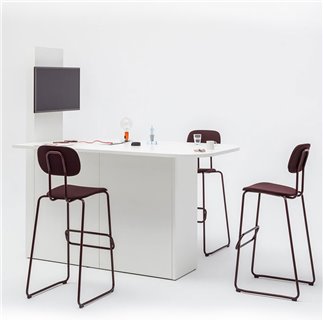
Video conferencing is now part of the everyday use of many meeting rooms. The choice of table can also influence how effectively the room functions for this purpose.
In this case, it is useful to consider the position of the screen, the orientation of participants and the placement of cameras and microphones.
An excessively wide table or an unsuitable layout can make it more difficult to frame participants correctly on camera. In rooms frequently used for video conferencing, technology and furniture should therefore be designed together.
Meeting Tables for Professional Practices
In professional practices, the meeting table often serves a dual purpose: functional and representative. Lawyers, accountants, architects, consultants and technical professionals use it to receive clients, present documents, discuss projects or sign contracts.
The choice of finishes therefore plays an important role, as the table contributes to the overall perception of the space. A compact solution may be sufficient for a small practice, while larger offices may benefit from a longer rectangular or oval table, possibly equipped with integrated electrification.
Meeting Tables for Hotels
Hotels, particularly those catering to business travellers, can use meeting tables in conference rooms, congress areas, meeting rooms, private rooms or coworking spaces.
In these environments, it is important to consider not only design, but also frequency of use and the possibility of integrating technology for presentations and video conferencing. In rooms frequently used by different companies, neutral finishes, organised cable management systems and durable surfaces can provide greater versatility.
Meeting Tables for Coworking Spaces
In coworking spaces, meeting rooms are also an essential service. Tables are used every day by different groups and must therefore offer practicality, stability, easy access to power sockets and versatility.
Durability is particularly important in this context, as the table is not used by a single team but by many different people throughout the week.
Meeting Tables for B&Bs and Hospitality Spaces
In smaller hospitality facilities such as B&Bs, residences and aparthotels, a dedicated meeting room is not always available. However, properties targeting business travellers may create small areas for informal meetings, work calls, interviews and small business meetings.
In these situations, a compact meeting table can provide a valuable additional function without requiring a large conference room.
CAM-Compliant and FSC®-Certified Meeting Tables
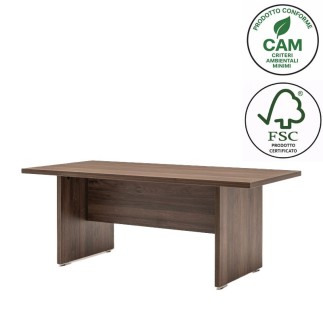
For projects intended for the Public Administration sector, compliance with CAM – Minimum Environmental Criteria is an important requirement. Isarreda offers CAM-compliant meeting tables whenever this feature is supported by the manufacturer's documentation.
Compliance must always be verified for the individual model and the specific configuration being supplied.
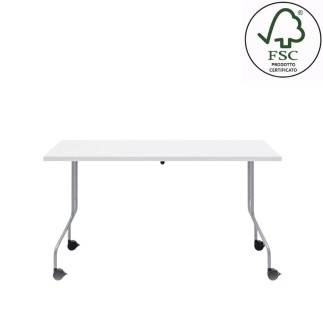
FSC® certification concerns materials of forest origin and their chain of custody. FSC specifies that certification applies to products containing forest-based materials, including furniture and wood-based panels.
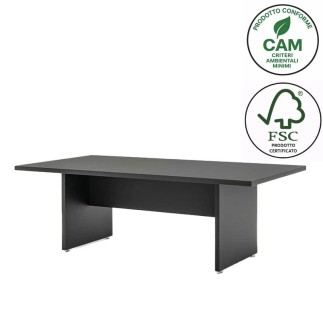
Isarreda offers a wide selection of FSC®-certified meeting tables. In this case too, certification must only be attributed to products for which it is officially documented.
CAM and FSC are not equivalent concepts: CAM identifies environmental requirements applicable to public-sector procurement and supply contracts, while FSC® concerns the origin and traceability of forest-based materials.
Meeting Tables with Reaction-to-Fire Tabletops
Some professional projects may require tables offering specific reaction-to-fire performance. Certain manufacturers may offer specific treatments or tabletop constructions in melamine designed to achieve a given reaction-to-fire classification.
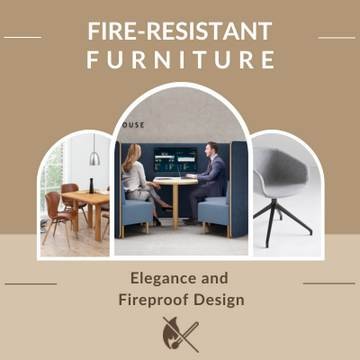
However, it is not correct to describe all meeting tables generically as fire-resistant.
Performance must be verified through documentation relating to the tabletop material and must be supported by a relevant test report.
Sustainable Meeting Tables
In addition to CAM and FSC®, sustainability can be assessed through various factors, such as materials sourced responsibly, recycled or recyclable components, and reduced use of raw materials.
A table that maintains its performance over time also helps reduce the need for frequent replacement.
How to Choose a Meeting Table
• How many people will use the room? This is the first factor to consider when determining the dimensions and shape of the table.
• How large is the room? The table should leave sufficient space around it for chairs and circulation.
• Which shape is most suitable? Rectangular, square, round and oval tables each support different ways of using the space.
• Will electrical sockets be required? If laptops and electronic devices are used frequently, top access units and electrification systems are worth considering.
• Will the room be used for video conferencing? If so, the position of monitors and cameras should also be taken into account.
• Are specific requirements such as CAM compliance, FSC® certification or reaction-to-fire performance required? Documentation must always be verified for the individual product.
Why Choose Isarreda for Meeting Tables?
Choosing Isarreda for meeting tables means designing the room around the actual requirements of the project. A professional practice may choose a compact and elegant table, while a company may prefer a large rectangular table with integrated electrification. A hotel may need a solution for its conference room, while a Public Administration project may require CAM-compliant models.
The possibility to choose from different shapes, dimensions, materials, finishes and accessories makes it possible to design meeting rooms that are more functional and consistent with the identity of the space.
The table therefore becomes not only the physical centre of the meeting room, but also a tool for communicating, collaborating and working more effectively.