


Lorem Ipsum is simply dummy text of the printing and typesetting industry. Lorem Ipsum has been the industrys standard dummy text ever since the ...
FIlter (2862 products)
Outdoor Bar and Restaurant Tables
Filter
44 products
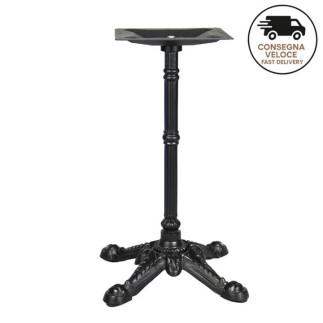
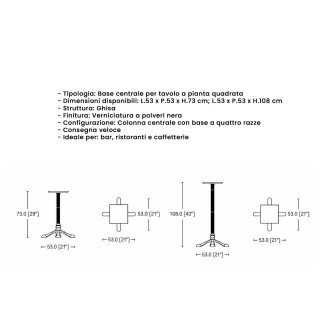
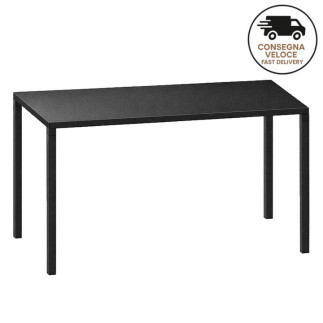
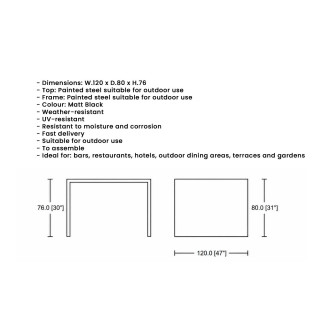
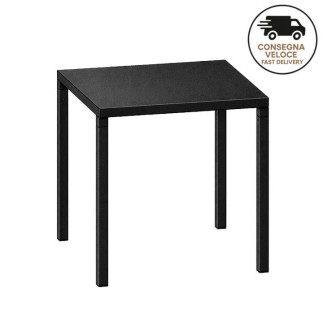
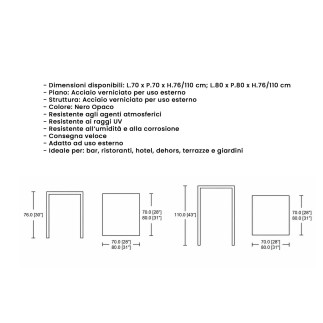
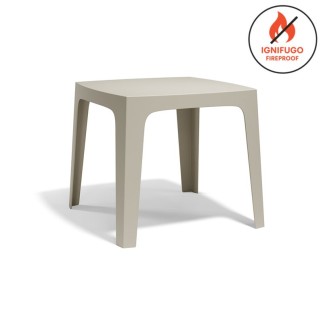
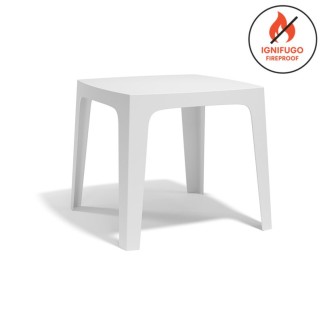
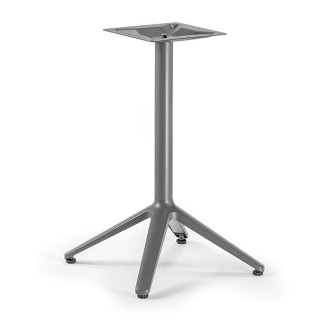
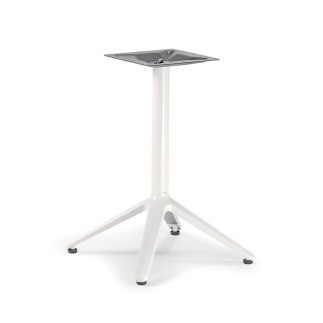
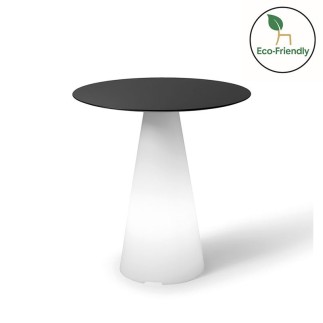
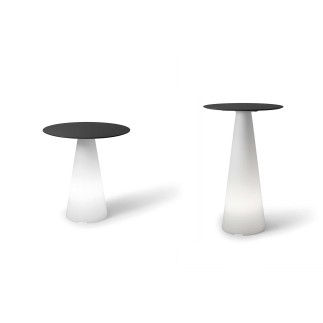
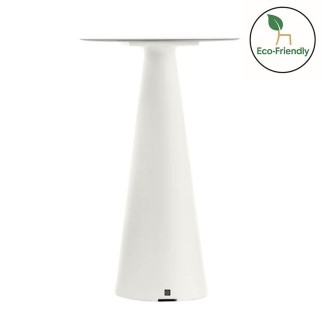
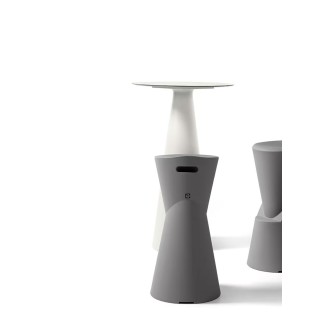
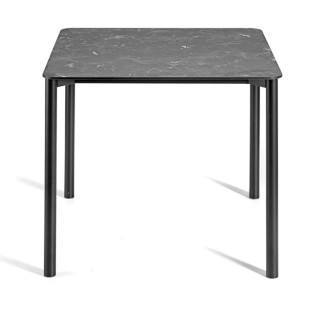
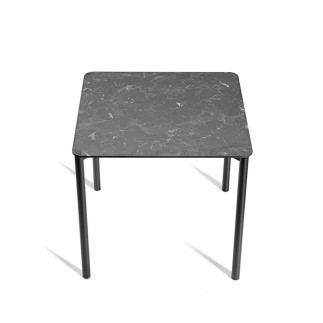
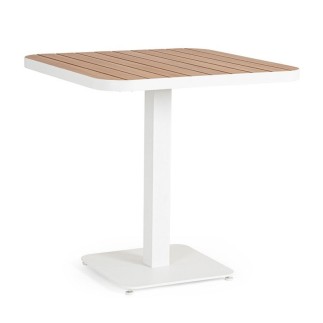
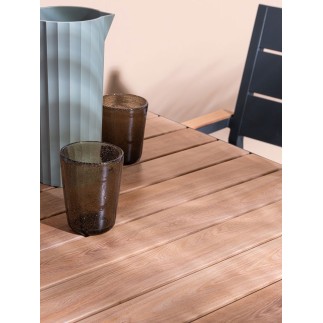


Outdoor Tables for Bars and Restaurants
Professional Outdoor Tables for Bars, Restaurants, Hotels and Outdoor Dining Areas
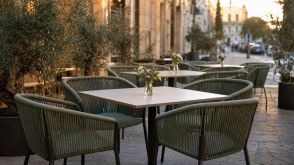
Outdoor tables for bars and restaurants are designed to furnish outdoor dining areas, terraces, verandas, rooftops, courtyards and other hospitality spaces dedicated to welcoming guests.
In a professional environment, an outdoor table is not simply a decorative element. It must contribute to service efficiency, ensure an appropriate seating layout and meet the daily operational needs of restaurants, bars, cafés, bistros, hotels and hospitality establishments.
Choosing the right table therefore involves considering not only aesthetics but also dimensions, materials, shape, stability, maintenance requirements and how frequently the furniture needs to be moved.
Isarreda offers outdoor tables for bars and restaurants featuring metal, aluminium, steel and technopolymer structures, with tabletops available in HPL, Compact laminate and technopolymer.
The wide range of sizes, shapes, colours and materials makes it possible to adapt each table to the identity of the venue and its specific operational requirements.
Why Choose Isarreda Outdoor Tables for Bars and Restaurants?
-
Tables for Bars and Restaurants: solutions designed for outdoor dining areas, terraces, bistros, cafés and hospitality establishments.
-
Customisation: a wide selection of dimensions, shapes, materials and colours to suit the specific needs of your venue.
-
Stackable Tables and Flip-Top Tables: ideal for simplifying storage and optimising space.
-
High Tables: solutions designed for cocktail bars, rooftops and aperitif areas.
-
Professional Quality: stability, durable surfaces and structures, and easy maintenance.
Outdoor Tables for Bars and Restaurants
Outdoor café tables must meet very specific requirements. In bars and cafés, tables are frequently used for breakfast, coffee, aperitifs or short breaks. For this reason, compact dimensions may be preferable to those of a large dining table.
Square or round tables allow greater flexibility when organising outdoor seating areas and make it easier to adjust the layout according to customer numbers.
Outdoor restaurant tables, on the other hand, must accommodate a more structured dining service. The tabletop needs to provide a larger surface, while table dimensions depend on the number of guests and the type of service offered.
A bistro may use compact two-seater tables, a traditional restaurant may prefer four-seater tables, while a hotel terrace may require larger and more versatile configurations.
Tables for Outdoor Dining Areas
Outdoor dining areas, often referred to as dehors, are among the most common settings for outdoor tables. These spaces can be found in squares, courtyards, terraces, covered walkways and even on pavements where space is limited.
In these environments, making efficient use of every available square metre is essential.
Choosing compact, easy-to-manage tables can help optimise seating capacity, staff circulation, guest comfort, cleaning operations and the flexibility of the outdoor layout.
Tables for Hotel and Resort Terraces
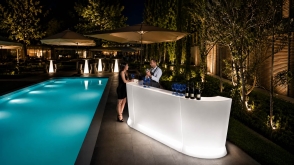
In hotels and resorts, outdoor tables can be used in a wide variety of settings, including panoramic terraces, rooftops, gardens, pool bars and outdoor breakfast areas.
Each environment requires a specific configuration. Standard-height dining tables may be suitable for a restaurant terrace, while rooftops and cocktail bars may benefit from a combination of standard-height and high tables.
Outdoor Tables for Bistros and Cafés
Bistros and cafés often require compact tables. This solution provides greater flexibility, allowing operators to quickly rearrange the layout, combine several tables to accommodate larger groups and make the most of the available space.
In these settings, tables with central bases, stackable models and flip-top tables are particularly worth considering.
Outdoor Tables: Which Shape Is Most Suitable?
Square outdoor tables are widely used in the hospitality industry because they offer considerable flexibility in space planning. They can easily be arranged in rows or placed side by side when the table structure allows it.
They are particularly suitable for bars, bistros, cafés and restaurants.
Rectangular outdoor tables provide a larger surface area and can accommodate groups or more extensive dining arrangements. They are suitable for restaurants, hotel dining areas, panoramic terraces and spacious outdoor dining areas.
Round outdoor tables encourage a softer, more welcoming and sociable seating arrangement.
Stackable Outdoor Tables and Flip-Top Tables
Stackable tables are an ideal solution when furniture needs to be moved or stored frequently. They simplify space management, particularly in professional hospitality environments.
Stackability is especially useful for seasonal outdoor dining areas, hotels, events and venues with limited storage space.
A flip-top table allows the tabletop to be tilted into a vertical position, making it possible to position multiple tables closer together during storage.
This configuration can simplify closing and cleaning operations at the end of service, while also making tables easier to move and helping optimise available space.
In the restaurant industry, this can represent a significant operational advantage.
Tables with Central Bases
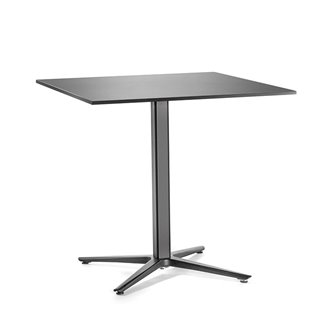
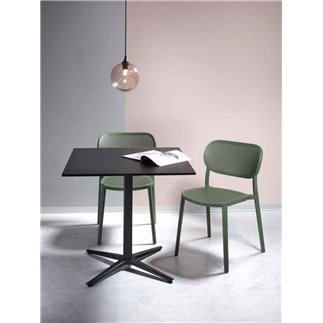
A central pedestal base is a popular choice for bar and restaurant tables because it generally allows greater freedom when positioning chairs compared with traditional four-legged tables.
This solution is particularly suitable for compact tables, usually square or round. Rectangular outdoor tables with a single central base are less common.
Outdoor Tables for Bars and Restaurants: Which Material Should You Choose?
Metal outdoor tables are among the most common solutions in the professional hospitality sector.
Depending on the venue's requirements and architectural style, tables may be made from steel, aluminium or cast iron, with specific treatments designed to make them suitable for outdoor use.
Aluminium is particularly attractive for hospitality environments thanks to its relatively low weight, which makes tables easier to move during cleaning, layout changes and events.
Plastic-based materials such as technopolymer, polypropylene (often reinforced with fibreglass) and polyethylene are highly versatile and are used to manufacture table structures, bases and tabletops.
Technopolymer is widely used in professional outdoor furniture to manufacture tabletops and structures. It is a popular choice thanks to its structural strength, thermal resistance and stain-resistant properties, making it suitable for everyday use.
Outdoor technopolymer tables are often manufactured using recycled or recyclable plastics.
HPL (High Pressure Laminate) is one of the most widely used materials for tabletops, particularly in the hospitality industry.
HPL tabletops are extremely versatile, allowing for slim profiles, a wide range of finishes and surfaces suitable for specific outdoor applications.
Customisable Outdoor Tables
The ability to customise tables for bars and restaurants makes it possible to create furniture configurations that reflect the identity of each venue.
Customisation options may include dimensions, shape, materials and colours for both the table structure and tabletop.
A restaurant may prefer neutral tones, a beach club may choose more distinctive colours, while a hotel may need to coordinate tables and chairs with the architectural style of its spaces.
In the hospitality sector, particular attention is paid to table height, which should be selected primarily according to its intended use.
Outdoor high tables, often paired with bar stools, are particularly suitable for cocktail bars, rooftops and aperitif areas.
Outdoor coffee tables are ideal for gardens, terraces and relaxation areas, while standard-height tables (H. 73 cm) are commonly used in dining and breakfast areas.
Quality of Professional Outdoor Hospitality Tables
The quality of an outdoor table for professional use should be assessed through practical characteristics, including structural stability and strength, tabletop resistance to intensive use and ease of cleaning.
These features should be carefully evaluated when selecting a table. In a restaurant or bar, tables may be used and cleaned many times throughout the same day.
Hospitality furniture is subjected to different demands compared with residential furniture.
Outdoor tables may be moved and cleaned frequently, used by numerous guests and exposed to weather conditions.
The selection should therefore take into account the actual operational requirements and daily activity of the establishment.
Eco-Friendly Outdoor Tables
Sustainability is becoming increasingly important in professional furniture.
Eco-friendly outdoor tables are manufactured using recycled or recyclable materials.
A growing number of manufacturers are expanding their collections with recycled and recyclable materials, particularly for furniture made from plastic-based components.
Gaber states that the technopolymers used for its tabletops are recyclable and that, wherever possible, recycled technopolymers derived from post-consumer waste are used.
Vondom uses rotationally moulded polyethylene resin in selected collections and states that certain models are 100% recyclable.
Outdoor Tables and Durability
Durability contributes to the sustainability of a product.
Professional furniture designed for long-term use reduces the need for frequent replacements.
Before purchasing an outdoor table for a bar or restaurant, it is therefore important to assess material quality and maintenance requirements.
How to Choose an Outdoor Table for a Bar or Restaurant
-
What type of venue are you furnishing? Bars, bistros, restaurants and hotels have different requirements.
-
How many guests do you typically need to accommodate? The number and dimensions of the tables should be evaluated together.
-
How much outdoor space is available? Chairs and circulation routes must also be considered when planning the layout.
-
Will the tables need to be moved frequently? Weight and ease of handling can become decisive factors.
-
Would stackable or flip-top tables be useful? These features can simplify closing procedures and storage.
-
Which material is most suitable? Material selection depends on exposure to the elements, maintenance requirements and intended use.
-
Are you looking for a more sustainable solution? Products made with documented recycled or recyclable materials may be available.
Complete Tables or Separate Table Bases and Tops?
In the professional furniture sector, it is possible to choose a complete table or configure the table base and tabletop separately.
A complete table offers a ready-designed solution, while choosing a separate base and tabletop provides greater flexibility in terms of dimensions, shape, materials and finishes.
Why Choose Isarreda for Outdoor Bar and Restaurant Tables?
Choosing Isarreda for outdoor bar and restaurant tables means having access to a range of professional solutions designed to meet different operational requirements.
A bar may choose compact tables to optimise its outdoor seating area.
A restaurant can organise its seating capacity using square, rectangular or round tables, while a hotel can coordinate furniture across its terraces, rooftops and pool bars.
The availability of metal, aluminium, technopolymer and plastic-based tables, combined with a variety of tabletops, dimensions, colours and finishes, makes it possible to create configurations that complement each project.
For selected products, the use of recycled and recyclable materials also adds a tangible and verifiable element of sustainability.
The result is an outdoor space designed not only to be visually appealing, but also to operate efficiently every day within the professional hospitality environment.